
Secure shopping

Banking and insurance
The Banking & Insurance sector – often referred to as the lifeblood of the real economy – is of vital importance in the modern credit-driven economic growth model. Among its functions are intermediation between savers and borrowers, ensuring funds are allocated efficiently; support of payment and settlement systems that facilitate trade and international economic relations; and provision of various products that mitigate risk and uncertainty. The accelerating pace of technological change, stricter regulation and shifting consumer habits are reshaping the traditional banking model and pushing the sector towards innovation-led growth.
Activities associated with Banking & Insurance are depositary and non-depositary credit intermediation and related activities, investment banking, securities brokerage, commodity contracts dealing and diverse financial investment activities. The sector also includes insurers, re-insurers and insurance brokerages, pension funds, health and welfare funds, monetary authorities, stock exchanges, and collection and credit agencies.
In recent years, China has been opening its financial services market to global investors and gradually easing access restrictions on foreign financial institutions. Insurance is at the forefront of the country's financial market opening. Since ...
View more details
Regulatory changes significantly impacted the pharmaceuticals and healthcare sector during the half-year from March to September 2025. The government's decision to reform the Goods and Services Tax (GST) regime for the first time since its ...
View more details
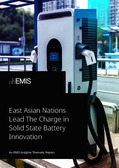
In 2024, worldwide electric car sales reached 17mn units, growing by over 25% y/y, data from the International Energy Agency showed. The electric car fleet stood at almost 58mn at the end of 2024, or about 4% of the total passenger car fleet and more ...
View more details
Indonesia's real estate sector demonstrates resilience and plays a crucial role in the national economy, extending its impact to numerous related industries and providing substantial employment. The government has actively supported the market ...
View more details
As 2030 approaches, Singapore is well on its way to achieving the 2 GW installed capacity goal set in its Singapore Green Plan 2030 initiatives. Yet, challenges to the adoption and integration of renewable sources still exist. Solar installed ...
View more details
Indonesia has abundant natural resources and potential for renewables exceeding 3,600 GW, making it one of the most resource-rich countries in the world. Despite this, adoption has been sluggish, consistently falling short of government targets. Coal ...
View more details
Thailand has been developing its renewable energy sector to improve its energy security and diversify away from the fossil fuels that continue to dominate its generation mix. Bioenergy is the largest contributor to Thailand's renewable portfolio, ...
View more details
The Indian electronics industry faces substantial volatility from the United States' imposition of retaliatory tariffs on imports. The tariffs have expressly excluded specific electronic devices. However, India's goal of assuming a more significant ...
View more details
Thailand's telecommunications market is characterised by a high degree of maturity and a strong mobile-first orientation, underpinned by aggressive network deployments and supportive government policies. While the overall information and ...
View more details