
Secure shopping

Banking and insurance
The Banking & Insurance sector – often referred to as the lifeblood of the real economy – is of vital importance in the modern credit-driven economic growth model. Among its functions are intermediation between savers and borrowers, ensuring funds are allocated efficiently; support of payment and settlement systems that facilitate trade and international economic relations; and provision of various products that mitigate risk and uncertainty. The accelerating pace of technological change, stricter regulation and shifting consumer habits are reshaping the traditional banking model and pushing the sector towards innovation-led growth.
Activities associated with Banking & Insurance are depositary and non-depositary credit intermediation and related activities, investment banking, securities brokerage, commodity contracts dealing and diverse financial investment activities. The sector also includes insurers, re-insurers and insurance brokerages, pension funds, health and welfare funds, monetary authorities, stock exchanges, and collection and credit agencies.
The real estate sector is a major pillar of China's economy and plays a crucial role in the country's economic growth. In 2023, the added value achieved by the real estate sector reached RMB 7,372bn, accounting for 5.8% of the GDP. In addition, the ...
View more details
The chemical sector is one of the critical pillars of the Chinese economy. The consistent development of China's chemical sector has been sustained for over two decades, primarily driven by the increased demand from both domestic and international ...
View more details
China is the world's largest producer and consumer of alcoholic beverages, producing almost one-half of the world's spirits and nearly one-fifth of the world's beer. In 2023, the country's beer output amounted to 35.6bn litres, ranking first in the ...
View more details
In recent years, the admission criteria for foreign banks have been gradually loosened. In 2018, China relaxed the conditions regarding the operation of foreign banks, allowing them to set up branches and subsidiaries. In January 2024, China's ...
View more details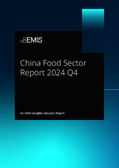
China is one of the largest food producers and consumers globally. It has been the world's biggest producer of grain and meat since 2012, according to the National Bureau of Statistics (NBS). In addition, the country is the world's biggest consumer ...
View more details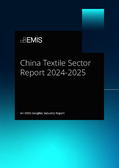
China's textile sector, as a traditional pillar industry of the national economy and an important industry for people's livelihoods, plays a significant role in boosting foreign trade, creating jobs, increasing farmers' income and promoting ...
View more details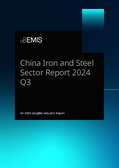
China is the world's largest producer, consumer, and exporter of steel. The country's crude steel production and consumption have both ranked first in the world for 28 consecutive years, according to the China Iron and Steel Association (CISA). In ...
View more details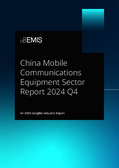
China's mobile communications equipment sector can be broadly divided into two subsectors: communication terminal equipment (e.g., mobile handsets) and communication station equipment (e.g., base stations and IoT communication modules). In 2023, the ...
View more details
The chemical sector is one of the critical pillars of the Chinese economy. The consistent development of China's chemical sector has been sustained for over two decades, primarily driven by the increased demand from both domestic and international ...
View more details
China's automotive sector continued to rank first globally in terms of production and sales in 2023. According to the statistics published by the China Association of Automobile Manufacturers (CAAM), the country's total motor vehicle output and sales ...
View more details