
Secure shopping

Banking and insurance
The Banking & Insurance sector – often referred to as the lifeblood of the real economy – is of vital importance in the modern credit-driven economic growth model. Among its functions are intermediation between savers and borrowers, ensuring funds are allocated efficiently; support of payment and settlement systems that facilitate trade and international economic relations; and provision of various products that mitigate risk and uncertainty. The accelerating pace of technological change, stricter regulation and shifting consumer habits are reshaping the traditional banking model and pushing the sector towards innovation-led growth.
Activities associated with Banking & Insurance are depositary and non-depositary credit intermediation and related activities, investment banking, securities brokerage, commodity contracts dealing and diverse financial investment activities. The sector also includes insurers, re-insurers and insurance brokerages, pension funds, health and welfare funds, monetary authorities, stock exchanges, and collection and credit agencies.
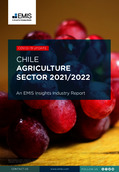
Chile holds leading positions in the production and export of several key agricultural commodities such as cherries, grapes, apples, walnuts, poultry meat and salmon. Agriculture plays a major socio-economic role in the country ...
View more details
Latin America was among the hardest-hit regions by the COVID-19 pandemic. The novel coronavirus entered the region at a bad time. The commodities boom at end of the 2000s combined with several local crises afterwards have hurt badly the public ...
View more details
The transportation sector in Latin America still faces the challenges of most developing countries: inadequate infrastructure; informality; lack of diversity and limited availability of intermodal services. According to the World Economic ...
View more details
In a Latin American context, Chile is not a particularly large pharmaceutical and healthcare market, since its population is relatively small and healthy in terms of incidence of communicable diseases. However, the country’s changing ...
View more details
As of the end of 2019, Latin America and the Caribbean accounted for 19.0% of the world’s crude oil reserves and 4.1% of natural gas reserves, turning the region into a prominent player in the global oil and natural gas industry ...
View more details
Chile is a relatively small economy, ranking 43rd globally and fifth in Latin America in 2019 according to the IMF. However, its retail sector is well developed, mature and sophisticated, and in many aspects on a par with those of developed countries ...
View more details
Chile has a relatively developed and diversified agriculture sector and is a leader in the production and export of several key commodities including cherries, grapes, apples, walnuts, poultry meat and salmon. Agriculture plays a major socio-economic ...
View more details
In the past two decades, Latin America has embraced a universal health strategy, based on the principles of equity, solidarity and collective action. This strategy required steadily growing public expenditure on health in order to guarantee universal ...
View more details
At the end of 2018, Latin America and the Caribbean accounted for 19.2% of the world’s crude oil reserves and for 4.3% of natural gas, making the region among the prominent players in the global oil and natural gas industry. However, a lack of ...
View more details
In a Latin American context, Chile is not a particularly large pharmaceutical and healthcare market, since its population is relatively small and healthy in terms of the incidence of communicable diseases. However, the country’s changing ...
View more details