
Secure shopping

Banking and insurance
The Banking & Insurance sector – often referred to as the lifeblood of the real economy – is of vital importance in the modern credit-driven economic growth model. Among its functions are intermediation between savers and borrowers, ensuring funds are allocated efficiently; support of payment and settlement systems that facilitate trade and international economic relations; and provision of various products that mitigate risk and uncertainty. The accelerating pace of technological change, stricter regulation and shifting consumer habits are reshaping the traditional banking model and pushing the sector towards innovation-led growth.
Activities associated with Banking & Insurance are depositary and non-depositary credit intermediation and related activities, investment banking, securities brokerage, commodity contracts dealing and diverse financial investment activities. The sector also includes insurers, re-insurers and insurance brokerages, pension funds, health and welfare funds, monetary authorities, stock exchanges, and collection and credit agencies.

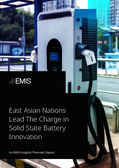
In 2024, worldwide electric car sales reached 17mn units, growing by over 25% y/y, data from the International Energy Agency showed. The electric car fleet stood at almost 58mn at the end of 2024, or about 4% of the total passenger car fleet and more ...
View more details
China's mobile communications equipment sector can be broadly divided into two sub-sectors: communication terminal equipment (e.g., mobile handsets) and communication station equipment (e.g., base stations and IoT communication modules). In 2024, the ...
View more details
The transportation sector is essential to the strategic running of the national economy, as well as an important service industry. In 2024, the added value of China's transportation sector accounted for 4.4% of total GDP. During the year, China's ...
View more details
Since 2017, China has been the second largest pharmaceutical market, after the US, according to Deloitte, and at the end of 2024 it had a share of 10% of the global pharmaceutical market. According to the National Bureau of Statistics (NBS), the ...
View more details
Renewable energy is central to China's efforts to meet its growing energy needs, while tackling environmental challenges. As the world's largest market for renewable energy investment, China's clean-energy technologies contributed over 10% to its ...
View more details
Driven by global climate governance and China's dual carbon goals — aiming for carbon emissions peaking by 2030 and achieving carbon neutrality by 2060 — the environmental protection industry has evolved from traditional pollution control into a ...
View more details
The total sales revenue of China's car parts sector reached RMB 4.62tn in 2024, which represented an increase of 4.8% y/y, according to data released by the China Business Intelligence Network (AskCI). By the end of 2024, the number of China's car ...
View more details
In 2024, China's total cement production declined by 9.6% y/y to 1.83bn tonnes, the lowest in the past decade. Due to weak market demand, most cement products witnessed a price fall during the year. Meanwhile, energy consumption control and the green ...
View more details
The investment, design, construction, operation and management of ports, roads, bridges, trains, urban rail transport, municipal infrastructures, buildings, environmental protection and associated projects domestically and internationally make up the ...
View more details