
Secure shopping

Banking and insurance
The Banking & Insurance sector – often referred to as the lifeblood of the real economy – is of vital importance in the modern credit-driven economic growth model. Among its functions are intermediation between savers and borrowers, ensuring funds are allocated efficiently; support of payment and settlement systems that facilitate trade and international economic relations; and provision of various products that mitigate risk and uncertainty. The accelerating pace of technological change, stricter regulation and shifting consumer habits are reshaping the traditional banking model and pushing the sector towards innovation-led growth.
Activities associated with Banking & Insurance are depositary and non-depositary credit intermediation and related activities, investment banking, securities brokerage, commodity contracts dealing and diverse financial investment activities. The sector also includes insurers, re-insurers and insurance brokerages, pension funds, health and welfare funds, monetary authorities, stock exchanges, and collection and credit agencies.
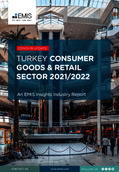
With its young and growing population of 84.3mn, Turkey has a well-developed and competitive consumer goods and retail sector. Strong consumer demand, propelled by its young population, fuels the retail sector, making it one of ...
View more details
In 2020, Turkey’s insurance sector continued growing in double digits in line with the country’s positive economic development. The industry reported a compound annual growth rate (CAGR) of 21.8% in the five years to 2020, driven mainly ...
View more details
Turkey is home to the second largest renewables-based power capacity in Emerging Europe after Russia. With almost 50 GW of installed capacity, renewables contribute to more than half of the total capacity, and 42% of the power ...
View more details
The COVID-19-induced recession meant it was vital for governments around the world to work hard to counteract the wide-ranging effects of the pandemic. While private investments may have suffered from the uncertainty of the pandemic, ...
View more details
Much like the rest of the world, the countries from Emerging Europe* are increasingly turning towards renewable energy (RE) to diversify their energy mix, reduce greenhouse emissions, and thus achieve a sustainable economic growth model. ...
View more details
Turkey has a well-rounded and impressive infrastructure sector, thanks mainly to years of government focus, with big chunks of the national budget being allocated to its transport and energy networks. It has one of the world’s busiest ...
View more details
As a small oil and gas producer, Turkey relies mainly on imports to meet its energy needs. Over the past decade, oil and gas have, combined, covered around 60% of the country's primary energy supply, making the Turkish economy highly ...
View more details
There are 70 different types of minerals produced in Turkey. The country ranks 10th globally in terms of mineral diversity-holding 0.4% of the world’s metallic mineral reserves, 2.2.% of the industrial raw material reserves, 1% of ...
View more details
Turkey has a well-developed food and beverages sector, serving a young and growing population of over 84mn. In addition to the large domestic market, the sector serves a large number of foreign tourists, rising by 14.2% y/y to 45 ...
View more details