Secure shopping

Banking and insurance
The Banking & Insurance sector – often referred to as the lifeblood of the real economy – is of vital importance in the modern credit-driven economic growth model. Among its functions are intermediation between savers and borrowers, ensuring funds are allocated efficiently; support of payment and settlement systems that facilitate trade and international economic relations; and provision of various products that mitigate risk and uncertainty. The accelerating pace of technological change, stricter regulation and shifting consumer habits are reshaping the traditional banking model and pushing the sector towards innovation-led growth.
Activities associated with Banking & Insurance are depositary and non-depositary credit intermediation and related activities, investment banking, securities brokerage, commodity contracts dealing and diverse financial investment activities. The sector also includes insurers, re-insurers and insurance brokerages, pension funds, health and welfare funds, monetary authorities, stock exchanges, and collection and credit agencies.
Extra-metropolitan retail establishments and mixed-use communities are proliferating in tandem with the urbanization of the nation. It is anticipated that metropolitan areas, including Metro Manila and Cebu City, will experience a surge in demand for ...
View more details
The Philippines' healthcare system comprises both public and private components. In the Philippines, public healthcare is devolved to local government units, with the central government operating only a few tertiary care and specialist health ...
View more details
The agribusiness sector plays an important role in the Philippines' economy, accounting for 9.5% of GDP in 2022 and 22.5% of employment in October 2022. The Philippines occupies leading positions in the global production of rice, pork, poultry meat, ...
View more details
The food & beverage sector plays an important role in the Philippines' economy, accounting for 9.7% of GDP in 2022. The Philippines occupies leading positions in the global production of rice, pork, poultry meat, coconuts and bananas with mixed ...
View more details
The Philippines' consumer goods and retail sector has grown rapidly in recent years, fueled by a young population and a growing middle class. The business process outsourcing (BPO) industry and a significant volume of USD-denominated remittances from ...
View more details
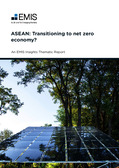
With over 660mn people, and a combined economy that represents the fifth largest in the world, the 10 countries forming the Association of Southeast Asian Nations (ASEAN) region have been relying on fossil fuels to power their fast growth. The ASEAN ...
View more details
The Philippines has one of the least developed insurance markets in the ASEAN region. Insurance penetration is considerably lower than in larger ASEAN nations, such as Thailand and Indonesia. Approximately 98% of the population of the Philippines ...
View more details