Secure shopping

Banking and insurance
The Banking & Insurance sector – often referred to as the lifeblood of the real economy – is of vital importance in the modern credit-driven economic growth model. Among its functions are intermediation between savers and borrowers, ensuring funds are allocated efficiently; support of payment and settlement systems that facilitate trade and international economic relations; and provision of various products that mitigate risk and uncertainty. The accelerating pace of technological change, stricter regulation and shifting consumer habits are reshaping the traditional banking model and pushing the sector towards innovation-led growth.
Activities associated with Banking & Insurance are depositary and non-depositary credit intermediation and related activities, investment banking, securities brokerage, commodity contracts dealing and diverse financial investment activities. The sector also includes insurers, re-insurers and insurance brokerages, pension funds, health and welfare funds, monetary authorities, stock exchanges, and collection and credit agencies.

The ICT sector accounted for more than 5% of the Hungarian GDP in 2016, compared with 5.3% in 2008. Sales resulting from the provision of Internet access (including mobile Internet) amounted to HUF 195bn in 2016, up 5.5% y/y as well. Sales revenues ...
View more details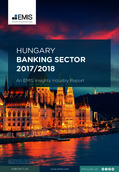
The Hungarian financial sector has significant potential for catching up with regional and EU development levels. The total loan-to-GDP ratio of credit institutions amounted to 50.9% in 2015. The financial sector (banking and insurance) generated 2 ...
View more details
The Hungarian insurance sector is split evenly between the life and non-life segments. Unlike the European life insurance market, the Hungarian life segment is dominated by unit-linked products that are linked to investment schemes. In 2016, the ...
View more details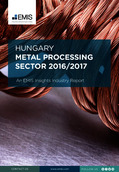
The metal processing sector is a key supplier for the automotive sector and the construction sector, which have been among the fastest-growing sectors in Hungary in the last five years. The total output of the metal processing sector stood at HUF 1 ...
View more details
In 2015, the total Hungarian healthcare expenditure amounted to HUF 2,373.4bn, or 7.04% of GDP. Public financing schemes made up 67.1% of the healthcare spending. By regional standards, the Hungarian health spending as a percentage of GDP is high, ...
View more details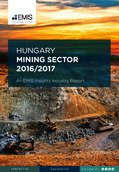
Hungary’s mining and quarrying sector accounted for less than 1% of GDP in 2015. The output of the sector fell by 11.8% y/y in 2015 and the downward trend continued in the first seven months of 2016 with a decline of 27.6% y/y. The decrease was ...
View more details
The automotive industry has been by far the most dynamically growing sector in Hungary since the end of the economic crisis of 2008-2009. Motor vehicle production grew by a spectacular CAGR of 18.6% in the period 2010-2015, reaching a record high 495 ...
View more details
The Hungarian electric power market is middle-sized compared to other European markets. The electric power sector is mature, meaning that all major power stations and the transmission network have been built and that electricity supply is stable. ...
View more details
The Hungarian agricultural sector is relatively small, accounting in 2015 for only 1.9% of the agricultural output of the European Union. The country was the sixth largest producer of industrial crops in the EU that year. The sector contributed ...
View more details