
Secure shopping

Banking and insurance
The Banking & Insurance sector – often referred to as the lifeblood of the real economy – is of vital importance in the modern credit-driven economic growth model. Among its functions are intermediation between savers and borrowers, ensuring funds are allocated efficiently; support of payment and settlement systems that facilitate trade and international economic relations; and provision of various products that mitigate risk and uncertainty. The accelerating pace of technological change, stricter regulation and shifting consumer habits are reshaping the traditional banking model and pushing the sector towards innovation-led growth.
Activities associated with Banking & Insurance are depositary and non-depositary credit intermediation and related activities, investment banking, securities brokerage, commodity contracts dealing and diverse financial investment activities. The sector also includes insurers, re-insurers and insurance brokerages, pension funds, health and welfare funds, monetary authorities, stock exchanges, and collection and credit agencies.
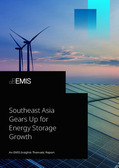

Southeast Asia is a subregion of the Asian continent which comprises eleven countries, notably Brunei Darussalam, Cambodia, Indonesia, Laos, Malaysia, Myanmar, the Philippines, Singapore, Thailand, Timor Leste, and Vietnam ...
View more details
Thailand's pharmaceutical and healthcare industries have grown significantly in recent decades. In 2002, the Thai government began providing universal healthcare to all Thai citizens, a successful initiative covering more than 99.9% of the Thai ...
View more details
Thailand's electric power sector is undergoing a shift towards a more sustainable energy architecture in order to meet rising demand and targets to become carbon neutral by 2050. Central to this shift is an aim to reduce the reliance on fossil fuels ...
View more details
Thailand's finance and insurance sector generates nearly 9% of the country's gross domestic product (GDP) and employs some 470,000 people. In 2024, the sector remained on a solid footing thanks to strong capital buffers, ample liquidity coverage, and ...
View more details
The infrastructure sector remains pivotal for the Thai economy with the government prioritising it as an essential factor for robust and sustainable development. Over the past decade, the government has made substantial investments in the expansion ...
View more details

Thailand is renowned as one of the world's top tourist destinations, with its tourism sector playing a vital role in the country's economic and social development. Contributing approximately 20% of Thailand's GDP and employing 21% of the workforce, ...
View more details
The largest producer of four-wheel vehicles in ASEAN, Thailand has positioned itself as a regional production and export hub. The strength of the Thai automotive industry lies in the long-standing presence of Japanese motor vehicle manufacturers, ...
View more details