
Secure shopping

Energy and utilities
The Energy sector plays a pivotal role in economic and social development by supplying what might be described as the “flow of blood” to production and transportation systems. Its main objective is to ensure the reliable, affordable and clean energy needed by modern societies, thus contributing to well-being and prosperity around the globe.
The Energy sector involves the generation, transmission and distribution of electricity derived from a variety of sources, including fossil fuels, nuclear power and renewable sources. It also includes activities concerned with fuels themselves, which extend along the entire value chain, such as oil and gas extraction and transportation, coal mining, refining of petroleum products, and wholesaling and retailing of fuels.
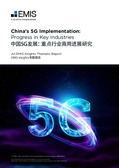
Since China initiated 5G technology R&D and standard formulation in 2013, the landmark national-level policy has been Made in China 2025 issued by the State Council in 2015. 5G technology, along with integrated circuits ...
View more details
Indonesia is the largest electric power producer in ASEAN, and the fifth largest in the Asia Pacific region (excl. China). At the same time, the gross value added (GVA) generated by the electricity supply sector accounts for just 1% of ...
View more details
Thailand is the third-largest power producer and consumer in ASEAN. The electric power sector takes 2.6% of the Thai economy, and contributes to about 0.3% of the overall employment. At the same time, the power sector is an important ...
View more details
Coal power still has a towering presence in China’s electricity generation, but the share of nuclear and renewable energy keeps increasing as the country is changing course towards a cleaner energy mix. According to the International ...
View more details
China first identified low-carbon development as an important focus of economic transformation in its 12th FYP guidelines. This time, policymakers reiterated the need to accelerate the process with an aim to meet the carbon ...
View more details
Malaysia’s power market consists of three geographical markets, namely Peninsular Malaysia, Sabah (including Labuan), and Sarawak. Tenaga Nasional Bhd (TNB) is the main power company in Peninsular Malaysia, while ...
View more details
India reported installed capacity from renewable energy sources as 77,641.63 MW in FY2019. The renewable energy installed capacity was 21.8% of total utility capacity. There is high demand for electricity in India and, with the growth ...
View more details
India reported an installed capacity for electric power generation of 356.1 GW in FY2019, rising by a CAGR of 6.68% from FY2015 to FY2019. Gross electricity generation was 1371.8 TWh in FY2019, growing at a CAGR of 5.27% from FY2015 to FY2019. India ...
View more details
Coal dominates Indonesia’s electric power sector as the country has abundant and cost-efficient coal resources. Coal power plants accounted for 51% of the total installed capacity and generated 60% of the electric power in the country in 2018. ...
View more details
Thailand is the third-largest power producer and consumer in ASEAN, behind Indonesia and Vietnam. Although important, the contribution of the sector to the overall economy is small. The power sector accounted for 2.7% of nominal GDP and about 0.3% of ...
View more details